
Parallel Changes the World, Collaboration Achieves the Future.
Factories and warehouses want to cut costs. After that, there is the important step of Palletizing. Do it wrong, then it can be expensive. That is where Cost-Effective Robotic Palletizing Solutions come in. They provide cost-effective, fully automated palletizing. These robots benefit businesses big and small.
Low-cost Palletizing Robots are built to be an affordable solution. They offer automation for less. They are still also efficient and reliable. Cost-effective does not equal cheap quality. It spells smart design and value for money. It makes automation available to more businesses.
What do cost-effective palletizing robots have? These features serve to minimize costs.
These robots use similar parts. So-called standard parts are less expensive to purchase. They also are more readily available and easier to replace. There is a cost advantage in using commodity hardware in a robot.
The design of cost-effective robots is easier. There are fewer complex moving parts. That makes them cheaper to build, too. That also makes them easier to maintain.
These robots do the bare minimum. They have great efficiencies in palletizing. They probably do not come with any extra fancy features. But their core job is done well. Concentrating on the core functions helps cut the cost.
The compact footprint Many affordable robots are small. They require less floor space. Their smaller size may reduce factory space costs. Compact robots are easy to place in your current spaces.
The robots are easy to set up and program. They are not too difficult to program or set up. Installation flexibility helps to reduce resources and costs for installation. Training needs are decreased by simple programming.
Many affordable robots are also energy efficient. They require less electricity to function. Reduced running costs via lower energy use. Add to that savings from energy efficiency.
There are tremendous advantages to using these robots. They can be good for a company’s bottom line.
The pricing is the most significant advantage. Inexpensive robots have a low purchase price. This opens the door for small businesses to automate. Less investment equals quicker return on investment (ROI).
There are several ways that these robots save you money. They use less energy. This is closely related to how they need less maintenance because of their simpler design. Reducing operating expenses drives up profitability.
Quicker Return on Investment (ROI) Due to lower upfront costs, these robots can be paid back quickly. So the savings from cutting labor and operating costs add up quickly. Quicker return on investment makes them the environmentally friendly option.
Increased Productivity Despite their low price, they still automate palletizing and pick-and-place activities, leading to increased productivity. Automation brings speed and consistency to its core. More products handled per hour means higher productivity.
Benefits of Automation, Better Accuracy. Always on Accurate every time robots stack pallets. They don’t make errors out of exhaustion. Palletizing that is consistent and precise leads to less damage to the products. It also optimizes the organization in warehouses.
Even entry-level palletizing robots give a safety boost. They step in and do the heavy lifting. It minimizes injury risk to workers. Fewer incidents in the workplace can reduce insurance costs.
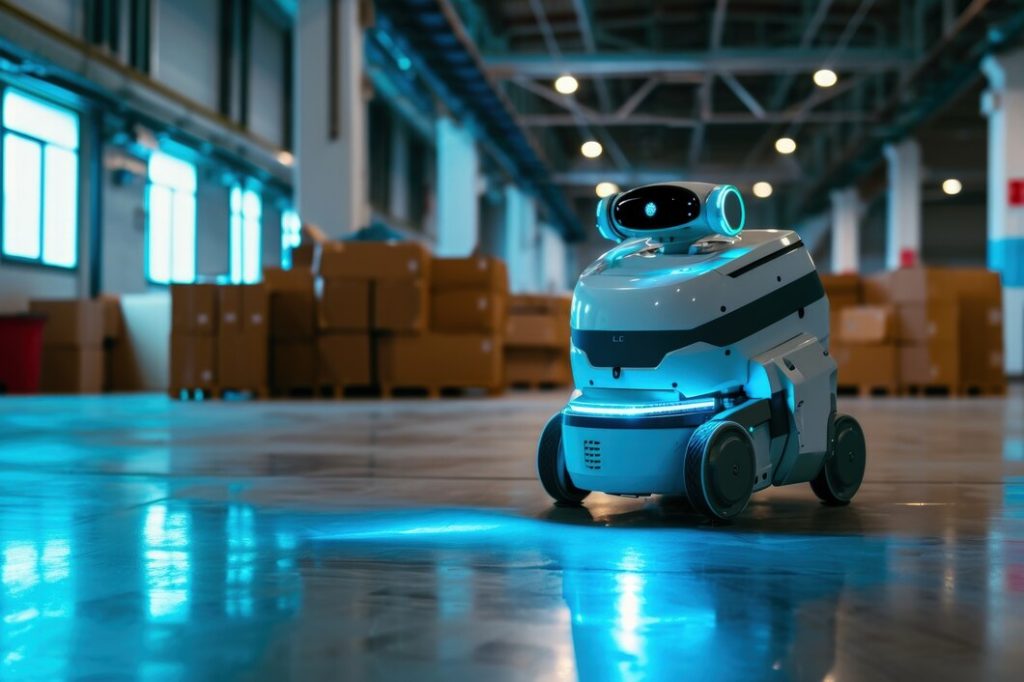
Cost-Effective Robotic Palletizing Solutions are available with various kinds of robots.
4 to 24 kg entry-level robotic arm palletizers. These are basic robotic arm systems. They provide the best balance of price and performance. This makes them suitable for many common palletizing tasks. A popular affordable option is entry-level robots.
Cobots are meant to work alongside humans without safety concerns. Palletizing is increasingly done with smaller cobots which can be very cost-effective. They are the simplest to install and program. Cobots are safe, affordable automation.
These can be off-the-shelf solutions. They are frozen in time to save costs. Systems that are pre-engineered are fast to produce and implement. They provide an affordable, plug-and-play solution.
Buying used robots can be an efficient way to save money. Refurbished robots are tested and repaired to run as well as new ones. Secondhand and refurbished robots are a super-budget option.
Simple layer palletizers can be economical. For some tasks, they are speedier than robotic arms. For certain applications, basic layer palletizers deliver speed and value.
How Cost Effectiveness is Attained These solutions save costs in different ways. The key to this is smart design and efficient processes.
Volume Manufacturing MASS PRODUCTION Building the same kind of robot of the same industrial design eliminates the cost per each unit produced And, as with cars, it’s cheaper to do more of the same. Robot prices fall thanks to economies of volume production.
Value Engineering Engineers design the robots to be incredible and cheap. “When they select materials and components, they are very deliberate. They emphasize core capabilities. Value engineering flavors are cost-saving with form.
Modular Design Robots using modules can be assembled and adjusted in this way. Consider modules as building blocks. A modular design approach increases the complexity and cost of manufacturing.
To make use of an efficient production process, robot makers use Lean Manufacturing Processes. They produce less waste during manufacturing, Lean processes reduce production costs. The savings get passed on to customers.
Robot companies purchase parts from across the globe. They locate the highest quality parts for the least amount of money. I/O domain, I/O pipeline, and I/O stacks.
Small and Medium-Sized Businesses (SMBs) — SMBs typically have tighter budgets. Affordable robots become automation for them. They are less susceptible to larger companies.
New businesses must manage expenses with hand-holding. Cheap robots enable them to automate in the early days. It can help them get bigger and operate more efficiently from the get-go.
Smaller food and drink brands are also able to use these robots. They might not need systems that are so complex. Cost-effective robots are within their scale and budget.
Agricultural businesses and farms use robots for palletizing produce. Tight margins in agriculture make cost-effective solutions important.
Basic palletizing requirements in a warehouse can be performed with low-cost robots. They might not require advanced functionalities. Low-cost automation still boosts efficiency.
Final Thoughts on Cost-Effective Robotic Palletizing Solutions. Low-cost palletizing robots make it an intelligent solution for many industries. It’s a great way to get entry-level automation in a palletizing application without a major capital investment.” They strike a good balance between price and performance. As technology improves and costs decrease, these solutions will become more common. If you are looking for highly efficient Cost-Effective Robotic Palletizing Solutions then visit Warsonco.










 Search
 +86 18046987606
  fiona@warsonco.com