
Parallel Changes the World, Collaboration Achieves the Future.
The growing adoption of compact dribble robots in small warehouses is not simply a trend, but a necessary evolution led by the double pressures of space constraints and increasing job costs. For small operations, where each square foot matters, these robots have a compelling solution. Traditional dribble systems can be bulky, which requires a large space on the floor that many smaller warehouses simply don't have. On the contrary, Compact palletizing robots for small spaces are designed to work efficiently within the closest boundaries, making them ideal for structures that want to maximize their conservation and operational efficiency.
In addition, the labor market is undergoing significant upheavals, pushing many small warehouses to rethink their workforce strategies. High turnover rates have become a chronic challenge for many companies, leading to an increase in training costs and operational interruptions. In this context, Compact palletizing robots for small spaces emerge as a precious resource. They require a minimum workforce to operate effectively, with the robots themselves capable of learning and adapting to different configurations and workloads of the pallets. This flexibility not only reduces the burden for human employees but also minimizes the complexities associated with the redevelopment and then new staff members.
The advantages of efficiency of these Compact palletizing robots for small spaces extend beyond the simple filling of lacunners of labor. The research indicates that the integration of compact palletization robots can lead to a tangible increase in productivity. The automation of repetitive tasks allows human workers to focus on more complex and value-added activities, ultimately improving the overall operating throughput. In a landscape in which the speed and accuracy of the logistics are fundamental, the consistency offered by these Compact palletizing robots for small spaces becomes a competitive advantage and, as the studies show, this translates into a better background line (Daios et al., 2024).
The safety advantages of the use of compact dribbling robots cannot be neglected. In environments where manual management of heavy loads is on the agenda, the risk of work in the workplace is a constant concern. By automating the dribbling process, companies can significantly reduce the occurrence of physical deformation injuries associated with lifting and repetitive movement, creating a safer job for their employees. Robots can manage the most demanding tasks while workers supervise operations, reducing dangers and promoting a healthier work environment.
It is worth noting that small warehouses are seeing these robotic technologies as strategic investments rather than simple expenses more and more. A recent survey highlights a growing recognition among operators of small structures that the automation of processes with compact dribble systems reduces operating complexity also guaranteeing consistent performance (Torchio, 2023). As the industry becomes more automated, the initial integration cost of these machines is often compensated by long-term savings made through greater efficiency and a reduction in work costs, as well as better safety registration.
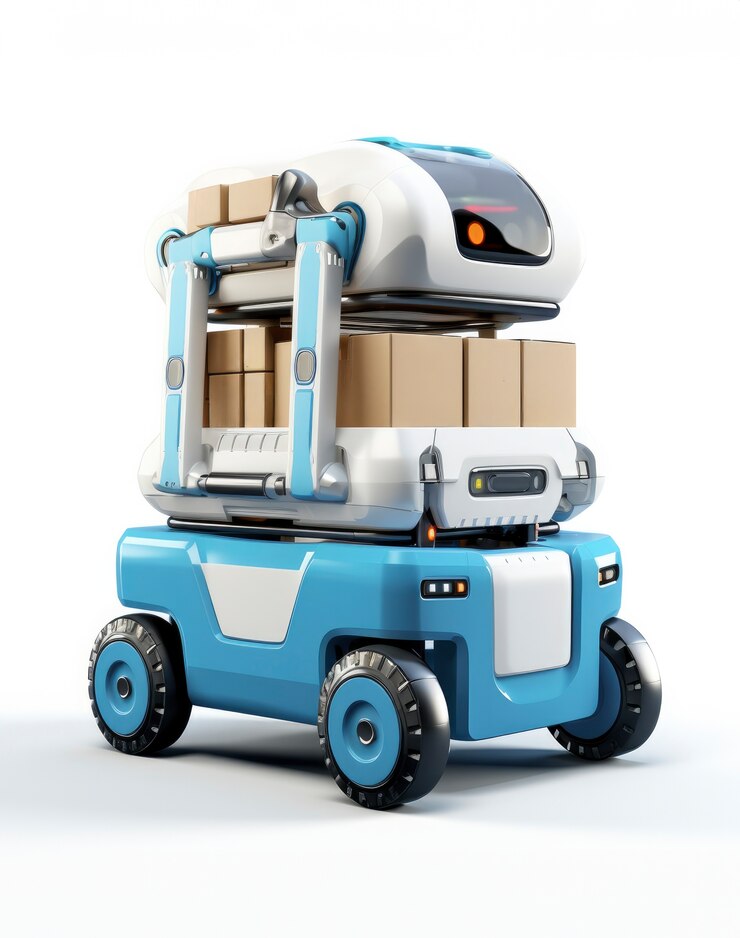
The integration of Compact palletizing robots for small spaces in small warehouses offers numerous advantages, but this transition is not without challenges. One of the main obstacles that operators face is the constraints of space. Many smaller warehouses have not been designed thinking about how the automation and imprint of a traditional dribble system can occupy precious properties. In facing this problem, small warehouse operators must engage in careful planning, which can require a complete redesign of their existing layouts to create an environment in favor of robotic systems. These companies must recognize that the advantages of optimizing their automation space can lead to drastically improved operational workflows.
Another remarkable deterrent to the adoption of compact dribble robots is the initial investment cost. For smaller warehouse operators, early expenses may appear to be discouraged, especially when you work on tight margins. However, it is essential to consider a wider picture. Research conducted by Azadeh et al. (2017) shows that the efficiency gains obtained through the implementation of these robotics can significantly compensate for the initial costs over time. Automating high-intensity tasks, in small warehouses can minimize the expenses related to work, reduce delays in the management of materials, and, ultimately, improve productivity. This greater efficiency is not simply a theoretical advantage; Many small operations that have integrated compact palletization solutions are experiencing tangible improvements in their productivity and a reduction of working hours dedicated to manual management.
In addition, the emphasis on safety within the workplace remains a crucial discussion point. The manual management of heavy goods has a significant risk of injuries, which can lead to expensive inactivity times and dissatisfied employees. By using compact dribbled robots, the warehouses can alleviate the burden of this dangerous work. These robots not only manage heavy weights safely, but they also do it consistently, reducing the risk of human error. The progress of technology led to systems equipped with functionality such as autonomous navigation and the avoidance of collisions. Research by Aleotti et al. (2021) highlights the use of 3D perception technology in robotic systems, allowing them to navigate in complex environments with precision. This improvement in accuracy not only increases operational efficiency but also improves the safety of workers, creating a more harmonious balance between human work and automated solutions.
In summary, while the integration of compact dribble robots in small warehouses has tangible challenges - from the limits of physical space to the initial financial abides - these challenges can be overcome through planning and weighted investments. Attention should not be exclusively on overcoming these obstacles, but rather on embracing the myriad of benefits that derive from automation, in particular in the realms of efficiency and safety. By weighing the long-term earnings against the initial setbacks, the small warehouse operators can position themselves not only for the current success but for a growth supported in the panorama of the evolving market. Ultimately, the adoption of Warsonco Compact palletizing robots for small spaces could act as a fundamental turning point to optimize operations and promote safer work environments.










 Search
 +86 18046987606
  fiona@warsonco.com